

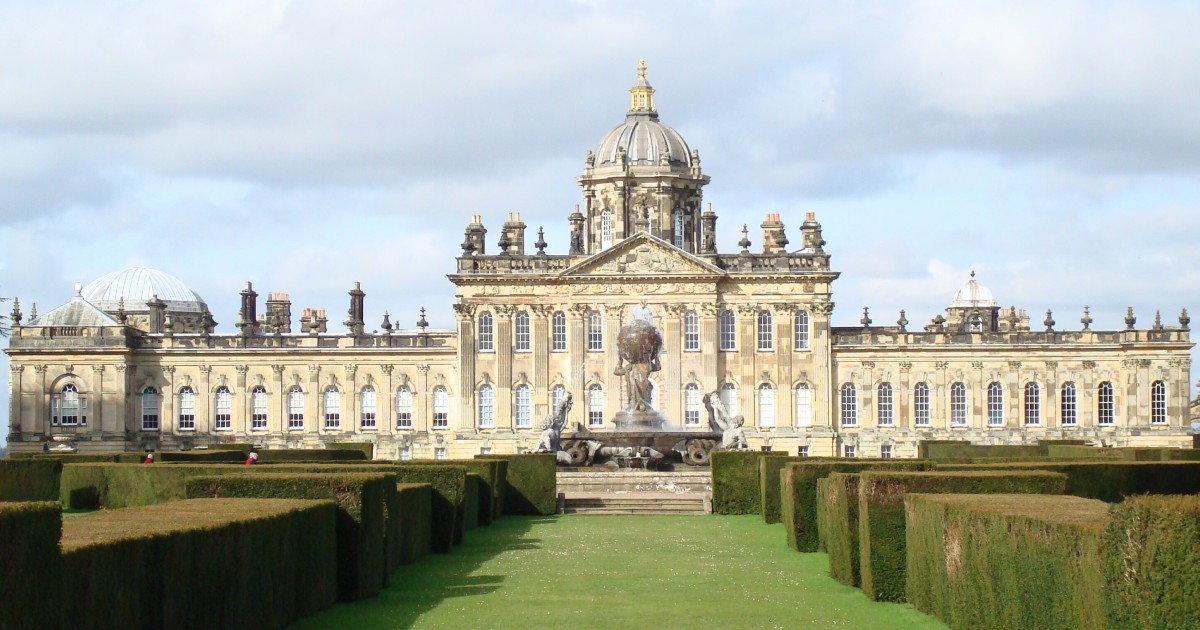
"Why is this house called a 'Castle'?"
"It used to be one until they moved it."
"What can you mean?"
"Just that. We had a castle a mile away, down by the village. Then we took a fancy to the valley and pulled the castle down, carted the stones up here, and built a new house. I'm glad they did, aren’t you?"
So says Sebastian Flyte of his family's ancestral home, Brideshead Castle, amid the languid summer Charles Ryder spends with him there. Evelyn Waugh called Brideshead Revisited his magnum opus, and so might Granada Television describe its 1981 adaptation of the novel, which I confidently assert to be one of the great masterpieces of TV drama production.
The casting of Brideshead is nothing short of spectacular, featuring a whole host of household names and both John Gielgud and Lawrence Olivier, but looming over and occasionally upstaging them all is Castle Howard, the magnificent baroque edifice that plays the role of Brideshead Castle itself. Designed by polymath John Vanbrugh, the self-taught "Rock star of the English Baroque", it is a house whose facades and interiors take the classical almost to the fantastical.
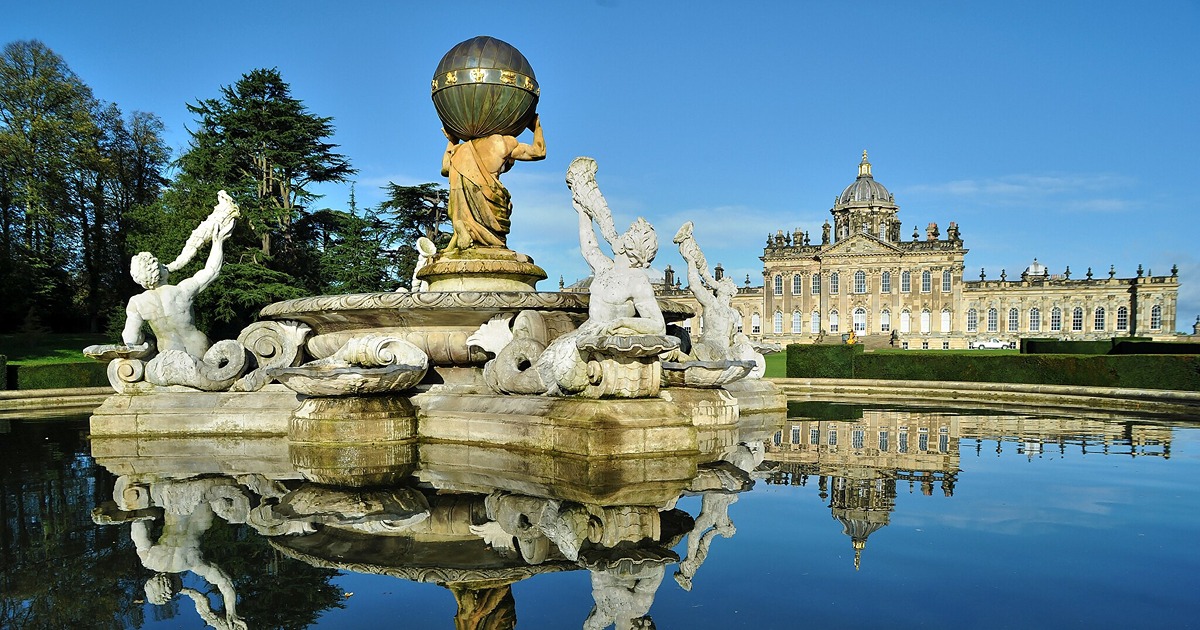 Castle Howard seen from the Atlas Fountain
It isn't known for certain that Waugh had Castle Howard in mind as an analog for the seat of the Marquesses of Marchmain, but there's a strong case to be made. Waugh knew the house, having visited at least once, and Baroque architecture, a dome and a classical fountain are all referenced in the manuscript, although there is a slight discrepancy: Brideshead is stated as being the work of Inigo Jones, whose Palladian restraint could not easily be confused with the dramatic classicalism of Vanbrugh at Castle Howard. There is just enough ambiguity for the debate to occasionally resurface throughout the subsequent decades, often in the letters pages of the Daily Telegraph, with no likelihood of a definitive conclusion. The association is so strong, however, that the producers of the 2008 film seem to have considered it essential the house retain its role and remain the unequivocal screen Brideshead.


.jpg)